🐾Pawbiotics

Cats

Hypoallergenic Cat Breeds: What Allergy-Sensitive Owners Should Know

Published 2026-05-0110 min read

Hypoallergenic cat breed lists can be helpful, but they can also create unrealistic expectations. This guide explains the breeds people often consider, what actually causes reactions, and how to plan a safer adoption.

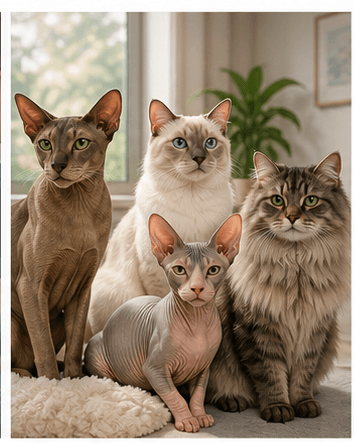
Group of different cat breeds often discussed for allergy-sensitive homes
No cat breed is completely hypoallergenic, but some cats may trigger fewer symptoms for certain people.
Educational guide only. This article does not replace a veterinary exam, diagnosis, or emergency care.
Section 1

Quick answer: hypoallergenic cat breeds

What this means

No cat breed is completely hypoallergenic. Some breeds, including Siberian, Balinese, Russian Blue, Devon Rex, Cornish Rex, Oriental Shorthair, and Sphynx, are often discussed as lower-allergen options, but individual reactions vary.

Section 2

Safety note

What this means

This guide is educational and does not replace medical allergy advice. People with significant asthma or allergy symptoms should speak with a healthcare professional before bringing a cat home.

Section 3

Why no cat is truly allergy-free

What this means

Many cat allergies are linked to proteins found in saliva, skin, and dander. Fur length alone does not determine allergy risk because cats spread allergens while grooming.

Section 4

Breeds often called hypoallergenic

What this means

Breed labels can be a starting point, not a guarantee. Spend time around the individual cat before adoption whenever possible.

Checklist

  • Siberian
  • Balinese
  • Russian Blue
  • Devon Rex
  • Cornish Rex
  • Oriental Shorthair
  • Sphynx
  • Bengal
Section 5

How to choose responsibly

What this means

The best choice is the cat you can tolerate in real life, not the breed that looks best on a list. Ask shelters, breeders, or rescues about trial visits, grooming needs, temperament, and return policies before committing.

Checklist

  • Spend time with the cat first
  • Track symptoms after exposure
  • Plan bedroom boundaries
  • Budget for grooming and cleaning
  • Avoid impulse adoption based only on breed
Section 6

Home strategies that help

What this means

Environmental control often matters as much as breed choice. Consistent cleaning, ventilation, and grooming routines can reduce allergen load in the home.

Checklist

  • Use HEPA filtration where practical
  • Keep sleeping areas lower-allergen
  • Wash pet bedding frequently
  • Vacuum with a suitable filter
  • Brush or groom according to coat type
Section 7

Common mistakes

What this means

Many allergy-sensitive households struggle because expectations are too absolute.

Checklist

  • Assuming hypoallergenic means no symptoms
  • Choosing by hair length only
  • Skipping trial exposure
  • Ignoring grooming requirements
  • Letting allergens build up before creating a cleaning routine
Section 8

When to Call a Vet

What this means

For the cat, call a vet for skin irritation, overgrooming, repeated sneezing, watery eyes, or breathing changes. These signs may be health issues rather than normal breed traits.

Section 9

Key Takeaways

What this means

Hypoallergenic is a practical search term, not a promise.

Checklist

  • No breed is allergen-free
  • Individual cat exposure matters
  • Home routines reduce allergen load
  • Choose with both health and lifestyle in mind

Frequently Asked Questions

There is no single best breed for everyone. Siberian, Balinese, Russian Blue, Rex breeds, Sphynx, and Oriental Shorthair are often considered, but personal exposure is the real test.

Sphynx cats are not truly hypoallergenic. They have little hair, but allergens can still be present in skin oils and saliva, and they need regular skin care.

Not always. Allergens are not only in hair. Saliva, dander, and skin proteins matter, so some short-haired cats may still trigger symptoms.

Grooming and cleaning can reduce allergen buildup, but they do not remove allergy risk completely. Use a routine that fits the cat's coat and stress tolerance.

No. Trial exposure is strongly recommended because allergy response varies by person and by individual cat.

Read [best cats for allergies](/blog/best-cats-for-allergies) for home strategy details and [why is my cat sneezing a lot](/blog/why-is-my-cat-sneezing-a-lot) for cat respiratory signs.