🐾Pawbiotics

Health Conditions

What Do Turtles Eat? Safe Foods, Feeding Tips, and Common Mistakes

Published 2026-05-0310 min read

Turtle feeding depends on species, age, size, and habitat. This guide explains safe food categories in simple English so owners can avoid the most common diet mistakes.

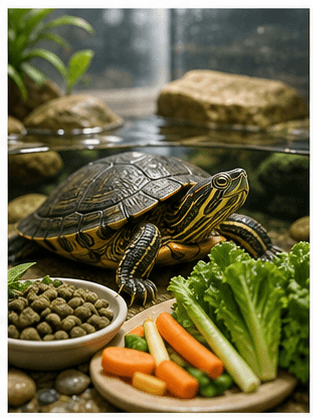
Aquatic turtle near leafy greens, pellets, and safe vegetables for a turtle feeding guide
Turtles need species-appropriate variety, clean water, and careful portion control.
Educational guide only. This article does not replace a veterinary exam, diagnosis, or emergency care.
Section 1

Quick answer: what do turtles eat?

What this means

Many pet turtles eat a mix of commercial turtle pellets, leafy greens, vegetables, and appropriate animal protein. Aquatic turtles often become more plant-focused as adults, while box turtles may need a balanced mix of plant and animal foods.

Section 2

Safety note

What this means

This guide is educational. Turtle diets vary by species, and reptiles can become ill from incorrect lighting, temperature, calcium balance, or water quality even when food seems correct.

Section 3

Aquatic turtle basics

What this means

Aquatic turtles usually eat in water. Offer a varied diet and remove leftovers so the tank stays clean.

Checklist

  • Quality turtle pellets
  • Romaine, collards, mustard greens, dandelion greens
  • Green beans, squash, bell pepper, and safe aquatic plants
  • Earthworms or insects when appropriate
  • Calcium support such as cuttlebone when advised
Section 4

Box turtle basics

What this means

Box turtles are omnivores, but the exact balance depends on age and species. Many adults need mostly vegetables with carefully chosen protein.

Checklist

  • Dark leafy greens
  • Chopped vegetables
  • Small amounts of fruit
  • Earthworms, crickets, or other safe insects
  • Veterinary guidance for supplements
Section 5

Foods to avoid

What this means

Unsafe or unbalanced foods can cause long-term health issues.

Checklist

  • Bread, processed meat, and salty human foods
  • Dog or cat food as a regular diet
  • Wild-caught insects from treated lawns
  • Too much fruit
  • Raw grocery meat as a staple
Section 6

Feeding frequency

What this means

Young turtles often eat more often than adults. Adult feeding may be daily or every few days depending on species, body condition, and veterinary advice. Watch weight, shell quality, appetite, and stool.

Section 7

Common mistakes

What this means

Most turtle diet problems come from low variety, poor calcium support, or dirty water.

Checklist

  • Feeding only dried shrimp
  • Skipping UVB and calcium planning
  • Leaving food to rot in the tank
  • Offering the same food every day
  • Ignoring appetite changes
Section 8

When to Call a Vet

What this means

Contact an exotic veterinarian for appetite loss, swollen eyes, soft shell, shell cracks, floating problems, mouth discharge, weight loss, or unusual lethargy.

Section 9

Key Takeaways

What this means

Turtles need more than one food type.

Checklist

  • Match diet to species and age
  • Use variety and clean feeding habits
  • Do not rely on human foods
  • Use an exotic vet for appetite or shell concerns

Frequently Asked Questions

Some leafy greens are useful, but iceberg lettuce has little nutrition. Better options often include romaine, collards, mustard greens, and dandelion greens when suitable for the species.

Young turtles often eat more frequently than adults. Adult schedules vary by species, size, temperature, and body condition.

Some turtles can have small amounts of fruit, but fruit should not dominate the diet because it is sugary and less balanced than vegetables and species-appropriate staples.

Dog food is not a good regular turtle diet because it is not balanced for reptiles. Use turtle-specific and species-appropriate foods instead.

Poor water temperature, stress, illness, wrong lighting, poor water quality, or unsuitable food can reduce appetite. Ongoing appetite loss needs exotic-vet help.

Read [what do axolotls eat](/blog/what-do-axolotls-eat) for another exotic aquatic feeding guide.