Quick Summary: How to Spot and Treat a Dog UTI
Urinary tract infections in dogs are acute bacterial infections affecting the lower urinary tract (urethra and bladder). Female dogs are statistically much more prone to UTIs due to their shorter and wider urethra, although intact and neutered male dogs can also develop infections.
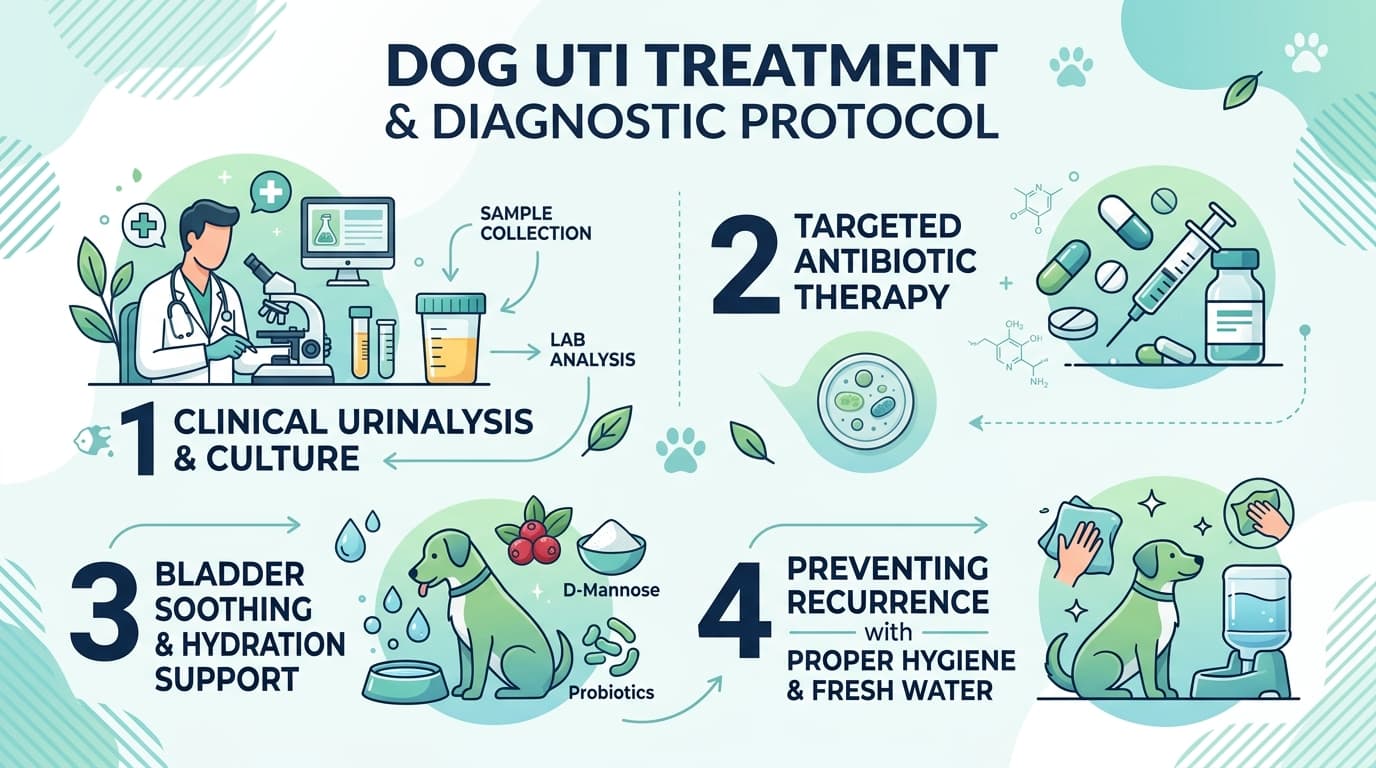
While supportive supplements like D-Mannose, cranberry extract, and probiotics help soothe the bladder and balance the microbiome, true bacterial UTIs require prescription veterinary antibiotics to fully eradicate the pathogen. Untreated UTIs can ascend to the kidneys, causing life-threatening pyelonephritis or precipitating struvite bladder stones.
Checklist
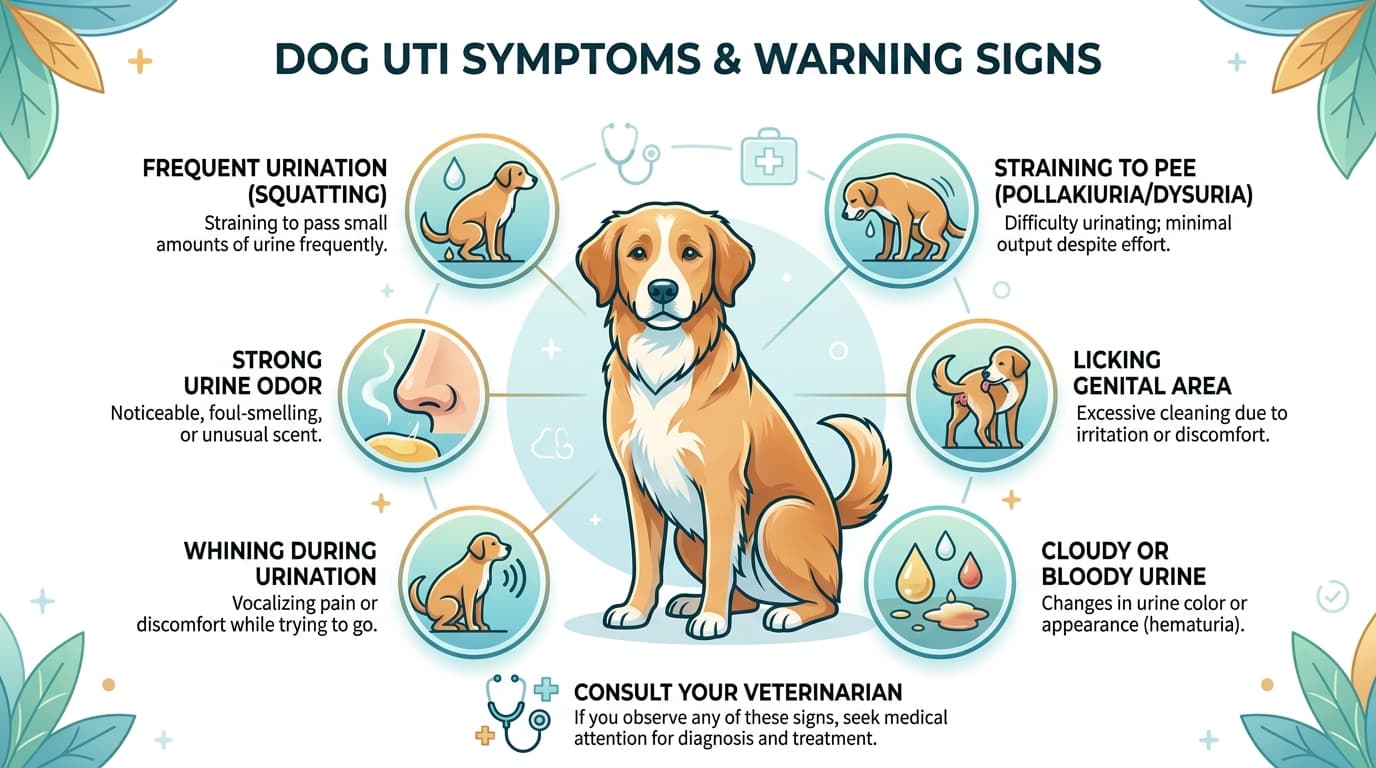
- Common Symptoms: Squatting frequently with only tiny drops produced (pollakiuria), blood-tinged urine (hematuria), house-training regression, and intense genital licking.
- Primary Culprit: E. coli accounts for approximately 70% to 80% of canine bacterial UTIs, followed by Staphylococcus, Proteus, and Klebsiella.
- Veterinary Diagnosis: A clinical urinalysis and urine culture & sensitivity test ensure the correct targeted antibiotic is selected.
- Supportive Care: Increase daily water intake, switch to high-moisture fresh or wet food, and supply targeted probiotics to maintain the gut-bladder microflora barrier.