🐾Pawbiotics

Dogs

My Dog Ate Chocolate: Toxicity Chart, Symptoms, and What to Do Right Now

Published 2026-08-3010 min read

If your dog just ate chocolate, your immediate priority is determining the toxicity risk based on three critical factors: your dog's weight, the type of chocolate ingested, and the amount eaten. Chocolate contains theobromine and caffeine—stimulant compounds called methylxanthines that dogs metabolize at an exceptionally slow rate compared to humans. In severe cases, toxic accumulation triggers cardiac arrhythmias, severe muscle tremors, seizures, internal bleeding, and fatal heart failure. Understanding the exact theobromine concentration in baking cocoa versus milk chocolate is the difference between a mild upset stomach and a life-threatening medical emergency.

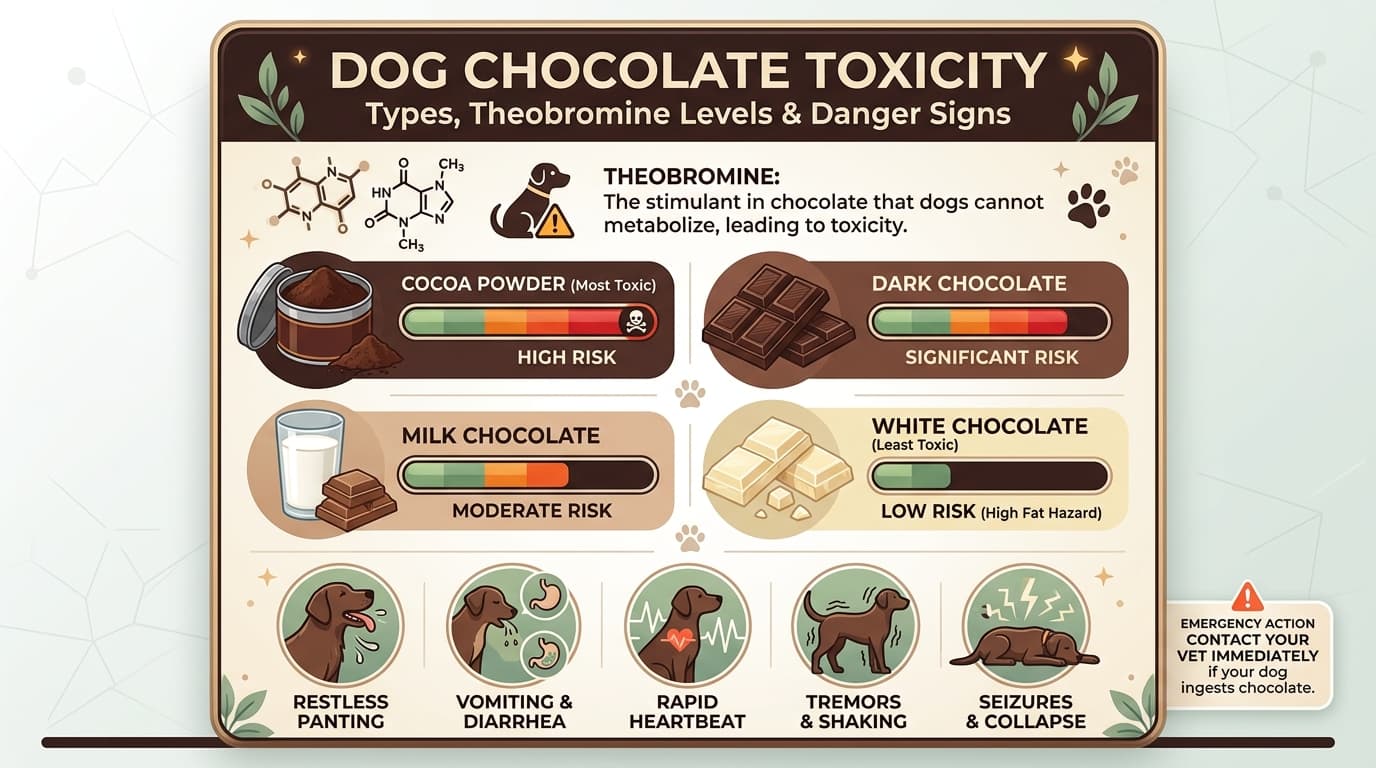
Dog Chocolate Toxicity Hierarchy and Danger Signs Infographic
Chocolate toxicity spectrum: Cocoa powder and dark chocolate carry the highest theobromine concentrations, triggering restlessness, vomiting, tachycardia, tremors, and seizures.

Compare with similar cat symptom guides: Why is my cat sneezing a lot?, Why is my cat drooling?.

Educational guide only. This article does not replace a veterinary exam, diagnosis, or emergency care.

Quick Summary: Emergency Triage for Chocolate Ingestion

Chocolate toxicity depends entirely on the dose of methylxanthines (theobromine + caffeine) ingested per kilogram of your dog's body weight. The clinical danger threshold begins at 20 mg/kg (mild gastrointestinal upset), escalates to cardiotoxicity at 40 to 50 mg/kg (racing heart, arrhythmias), and becomes life-threatening at 60 mg/kg and above (tremors, seizures, cardiac arrest).

Dark chocolate and dry cocoa powder are exponentially more dangerous than milk chocolate. A single 1-ounce square of unsweetened baker's chocolate contains enough theobromine to cause severe poisoning in a 20-pound dog, whereas that same dog would need to eat nearly 8 ounces of milk chocolate to reach similar cardiac toxicity levels.

Checklist

  • Emergency Action Window: If chocolate was consumed within the last 2 hours, emergency veterinary decontamination can prevent 80% to 90% of toxin absorption.
  • Most Dangerous Types: Cocoa powder (baking cocoa), unsweetened baker's chocolate, and 70%+ dark artisanal chocolate.
  • High-Risk Signs: Persistent vomiting, pacing, intense thirst, panting, racing heart rate (>160 bpm), twitching, muscle tremors, and seizures.
  • Emergency Contacts: ASPCA Animal Poison Control Center (888-426-4435) or your nearest 24/7 Emergency Veterinary Hospital.
Why Is Chocolate Toxic to Dogs? Theobromine & Caffeine Pharmacokinetics

Humans easily metabolize theobromine and caffeine through hepatic cytochrome P450 enzymes within 2 to 3 hours. Dogs, however, lack the specific hepatic enzymatic pathways required to break down methylxanthines efficiently.

Key physiological mechanisms of canine chocolate toxicity include:

Checklist

  • Prolonged Elimination Half-Life (17.5 Hours): Theobromine remains active in the canine bloodstream for nearly 18 hours, repeatedly circulating and reabsorbing across the bladder wall (enterohepatic and renal recirculation).
  • Adenosine Receptor Antagonism: Methylxanthines competitively block cellular adenosine receptors, causing central nervous system overstimulation, severe anxiety, and seizure activity.
  • Intracellular Calcium Influx: Theobromine inhibits phosphodiesterase enzymes, increasing cyclic AMP (cAMP) and intracellular calcium influx in myocardial tissue. This causes excessive cardiac contractility, tachycardia, and lethal ventricular arrhythmias.
  • Renal & Bladder Reabsorption: Methylxanthines are excreted into the urine but can be passively reabsorbed across the bladder mucosa back into the bloodstream, prolonging systemic poisoning.

Chocolate Toxicity Hierarchy: How Dangerous Is Each Type?

The darker and more bitter the chocolate, the higher the concentration of theobromine per ounce. Knowing the exact product helps veterinarians calculate precise milligram dosages:

Checklist

  • Dry Cocoa Powder (Highest Risk): 400 to 737 mg of theobromine per ounce. Cocoa powder used for baking or hot cocoa mix is the most lethal form of chocolate for dogs.
  • Unsweetened Baker's Chocolate (Severe Risk): 390 to 450 mg of theobromine per ounce. Just one 1-oz square can severely poison a small or medium dog.
  • Dark & Semi-Sweet Chocolate (High Risk): 130 to 200 mg of theobromine per ounce. Gourmet 70% to 85% cacao bars carry high toxicity in very small portions.
  • Milk Chocolate (Moderate Risk): 45 to 60 mg of theobromine per ounce. Large quantities (candy bars, Easter eggs) are required to cause cardiac crisis, but moderate ingestion easily causes acute gastroenteritis.
  • White Chocolate (Low Theobromine / High Fat Risk): 0.25 to 1 mg of theobromine per ounce. White chocolate contains almost zero theobromine, but its extremely high cocoa butter and sugar content frequently triggers severe acute pancreatitis.

Clinical Toxicity Matrix: Dog Weight vs. Chocolate Ingestion Limit

Use this veterinary reference matrix to estimate the approximate amount of chocolate (in ounces) required to trigger toxic clinical thresholds across different dog weights:

Dog Body Weight

10 lbs (4.5 kg)

Cocoa Powder (Severe / Fatal)

0.25 oz (7 g)

Baker's Chocolate (Severe)

0.3 oz (9 g)

Dark Chocolate (Moderate / Cardiotoxic)

0.8 oz (23 g)

Milk Chocolate (Mild / Moderate GI)

3.5 oz (100 g)

Dog Body Weight

25 lbs (11.3 kg)

Cocoa Powder (Severe / Fatal)

0.6 oz (17 g)

Baker's Chocolate (Severe)

0.8 oz (23 g)

Dark Chocolate (Moderate / Cardiotoxic)

2.0 oz (57 g)

Milk Chocolate (Mild / Moderate GI)

8.5 oz (240 g)

Dog Body Weight

50 lbs (22.7 kg)

Cocoa Powder (Severe / Fatal)

1.2 oz (34 g)

Baker's Chocolate (Severe)

1.6 oz (45 g)

Dark Chocolate (Moderate / Cardiotoxic)

4.0 oz (113 g)

Milk Chocolate (Mild / Moderate GI)

17.0 oz (480 g)

Dog Body Weight

75 lbs (34.0 kg)

Cocoa Powder (Severe / Fatal)

1.8 oz (51 g)

Baker's Chocolate (Severe)

2.4 oz (68 g)

Dark Chocolate (Moderate / Cardiotoxic)

6.0 oz (170 g)

Milk Chocolate (Mild / Moderate GI)

25.5 oz (720 g)

Dog Body Weight

100 lbs (45.4 kg)

Cocoa Powder (Severe / Fatal)

2.4 oz (68 g)

Baker's Chocolate (Severe)

3.2 oz (90 g)

Dark Chocolate (Moderate / Cardiotoxic)

8.0 oz (226 g)

Milk Chocolate (Mild / Moderate GI)

34.0 oz (960 g)

Hour-by-Hour Symptoms Timeline: From Ingestion to Toxicity

Symptoms of chocolate poisoning typically begin within 2 to 4 hours post-ingestion, but because methylxanthines are absorbed slowly through fatty chocolate matrices, peak toxicity may not occur until 6 to 12 hours later:

Checklist

  • Hours 0 to 2 (Early Ingestion Window): Dog may appear completely normal or exhibit mild restlessness, licking lips, and drinking excess water. This is the golden window for veterinary emesis.
  • Hours 2 to 6 (Gastrointestinal & Early Cardiac Phase): Vomiting (often smelling like chocolate), diarrhea, abdominal bloating, persistent whining, pacing, rapid shallow breathing, and elevated heart rate (tachycardia >140-160 bpm).
  • Hours 6 to 12 (Neurological & Severe Cardiotoxicity): Severe muscle twitching, ataxia (wobbly gait), extreme hyperactivity, urinary incontinence, dangerous hypertension, and premature ventricular contractions (PVCs) on ECG.
  • Hours 12 to 36 (Critical Toxicity & Organ Failure): Continuous muscle rigidity, generalized grand mal seizures, severe hyperthermia (>104°F / 40°C), cardiac arrhythmias, respiratory collapse, coma, and potential fatality.

Emergency Action Plan: What to Do in the First 2 Hours

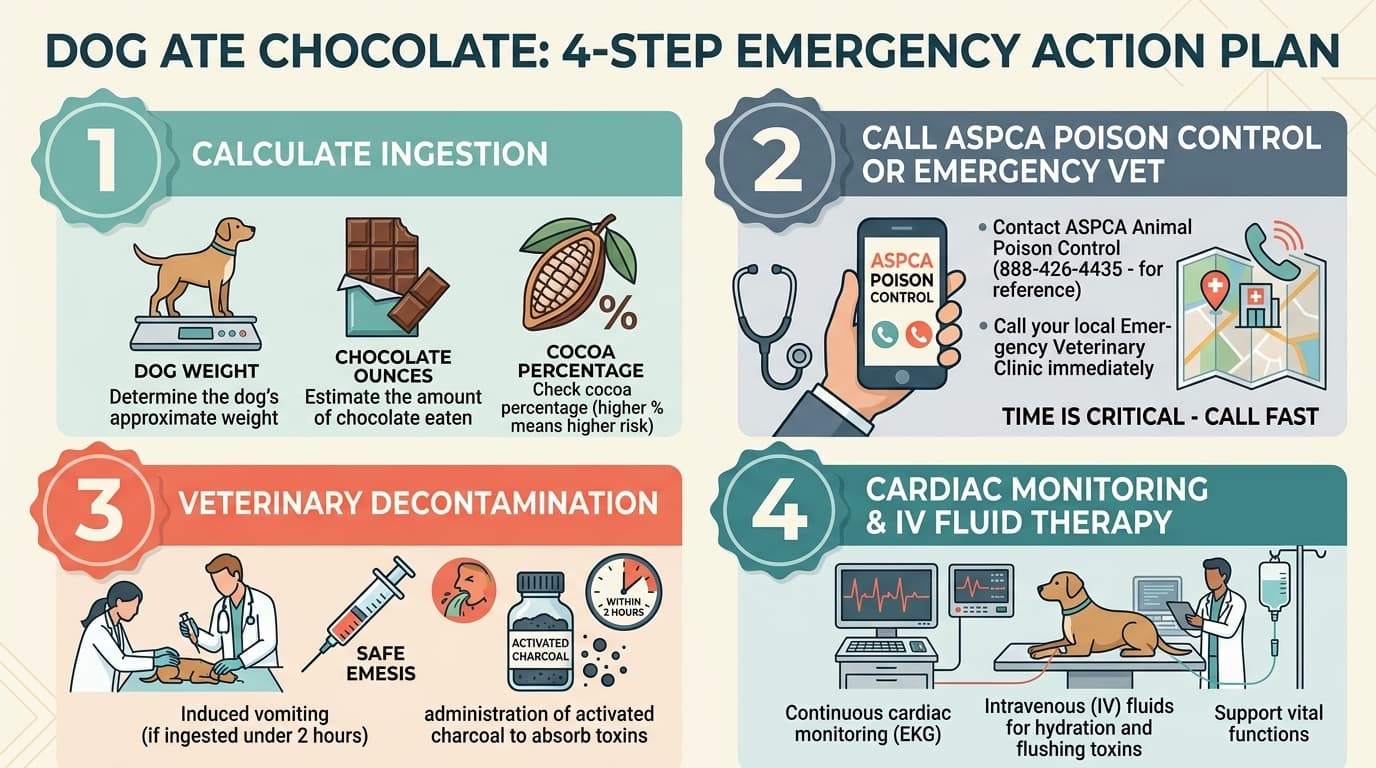
If you discover your dog has consumed chocolate, follow this immediate 4-step emergency sequence:

Step 1: Secure Packaging & Calculate Intake: Immediately take away any remaining chocolate and wrappers. Note the exact product brand, cacao percentage, total weight eaten, and the estimated time of ingestion.

Step 2: Check Your Dog's Weight & Call Emergency Triage: Call your local 24/7 veterinary hospital or the ASPCA Poison Control Center (888-426-4435). Give them the dog's weight and chocolate specs so they can calculate the exact mg/kg theobromine dose.

Step 3: Transport Immediately for Clinical Decontamination: If ingestion occurred within 2 hours, do NOT waste time trying unverified home remedies. Veterinary staff can safely administer Apomorphine (injectable or subconjunctival) or Clevor (ropinirole eye drops) to induce complete emesis within 3 to 5 minutes without gastric trauma.

Step 4: Avoid Dangerous Home Hydrogen Peroxide: Giving 3% hydrogen peroxide at home carries severe risks of hemorrhagic gastritis, esophageal ulceration, and fatal aspiration pneumonia. Only induce vomiting at home if explicitly instructed and dosed by a licensed veterinarian when you are hours away from clinical care.

Dog Ate Chocolate 4-Step Emergency Action Plan Infographic
4-step clinical decontamination protocol: calculate ingestion, call ASPCA Poison Control or ER vet, veterinary emesis within 2 hours, and cardiac monitoring with IV diuresis.

Veterinary Hospital Treatment: Decontamination, Charcoal & Cardiac Support

Once at the veterinary emergency hospital, medical treatment focuses on preventing further absorption, eliminating circulating methylxanthines, and protecting cardiac and neurological function:

1. Medical Induction of Emesis: Rapid-acting emetics empty the stomach before chocolate melts completely and passes into the duodenum.

2. Multiple Doses of Activated Charcoal: Activated charcoal binds theobromine in the gut. Because theobromine undergoes enterohepatic circulation (secreted into bile and reabsorbed in the intestines), repeated doses of charcoal every 4 to 6 hours are administered to continuously trap toxins.

3. Aggressive IV Fluid Diuresis: High-rate intravenous crystalloid fluids support renal perfusion, promote rapid urinary excretion of theobromine, and prevent tubular kidney damage.

4. Frequent Urinary Bladder Voiding: Because theobromine can reabsorb across the bladder wall into the bloodstream, hospitalized dogs are walked frequently or placed on a urinary catheter to keep the bladder empty.

5. Continuous ECG & Anti-Arrhythmic Medications: Continuous cardiac telemetry monitors for ventricular tachycardia. Beta-blockers (such as propranolol or esmolol) or lidocaine are administered to control dangerous arrhythmias.

6. Anti-Convulsant & Sedative Therapy: Benzodiazepines (diazepam/midazolam) or methocarbamol are used to control severe muscle spasms, tremors, and seizures.

Post-Toxicity Recovery: Pancreatitis Prevention & Gut Microbiome Restoration

Dogs that successfully survive chocolate toxicity face a secondary health hazard: acute pancreatitis triggered by the immense fat and sugar load in chocolate and cocoa butter.

During the 5 to 7 days following discharge, follow these veterinary recovery steps:

1. Low-Fat Bland Diet: Feed small, frequent meals of boiled skinless chicken breast with white rice or a prescription gastrointestinal low-fat diet to rest the pancreas.

2. Monitor for Pancreatitis Red Flags: Watch for abdominal pain ('prayer position' stretching), delayed vomiting, fever, or refusal to eat over the first 72 hours post-recovery.

3. Restore the Gut Microbiome: Severe vomiting, activated charcoal, and gastrointestinal inflammation strip beneficial gut microflora. Adding a clinically validated canine probiotic restores mucosal barrier integrity and normalizes stool consistency — learn more in our Dog Probiotics for Digestion Guide.

4. Prevent Future Incidents: Store all baking supplies, cocoa powders, and candy on high, latched pantry shelves. Use our Dog Food Portion Calculator to ensure your dog is receiving adequate daily calories so they are less inclined to scavenge.

Frequently Asked Questions

Toxicity starts at 20 mg of theobromine per kilogram of body weight. For a 20-pound dog, just 0.5 oz of baking cocoa, 0.7 oz of baker's chocolate, 2 oz of dark chocolate, or 7 oz of milk chocolate will cause clinical poisoning. Higher doses can be fatal.

Early signs (restlessness, panting, vomiting, diarrhea) usually begin within 2 to 4 hours. Neurological and cardiac symptoms (racing heart, muscle tremors, seizures) peak between 6 and 12 hours post-ingestion as theobromine is absorbed into the bloodstream.

Dogs that consume mild doses of milk chocolate may experience only mild diarrhea or vomiting. However, if the dose exceeds 40 to 50 mg/kg or involves dark/baking chocolate, the risk of fatal cardiac arrhythmias or seizures makes immediate emergency veterinary care essential.

Veterinarians strongly advise against using hydrogen peroxide at home because it can cause severe hemorrhagic gastritis, stomach ulceration, and aspiration pneumonia. Always call a vet or animal poison control before administering any home emetic.

For medium to large dogs, a single chocolate chip cookie or a few M&Ms contain very low theobromine levels and will generally only cause mild stomach upset. However, for toy breeds or puppies (under 5 lbs), even small amounts of chocolate should be calculated by a vet.

Dark chocolate contains 3 to 4 times more theobromine per ounce than milk chocolate, and unsweetened baking cocoa contains nearly 8 to 10 times more. A dog needs to eat far less dark chocolate to reach fatal toxicity levels.

White chocolate contains virtually no theobromine, so the risk of theobromine poisoning is minimal. However, white chocolate is extremely high in cocoa butter fat and sugar, which can trigger severe, life-threatening acute pancreatitis in dogs.

In the United States, you can contact the ASPCA Animal Poison Control Center at (888) 426-4435 or the Pet Poison Helpline at (855) 764-7661. Both services operate 24/7/365 with board-certified veterinary toxicologists.