🐾Pawbiotics

Cats

Cat-Safe Flowers and Plants: Which Houseplants Are Safe (and Which Are Deadly)

Published 2026-08-3011 min read

Bringing fresh floral bouquets and vibrant indoor greenery into your home can brighten any room, but for cat parents, botanical choices can be a matter of life and death. Felines are natural obligate carnivores with curious, playful instincts and unique hepatic enzyme deficiencies—specifically a lack of glucuronosyltransferase—that leave them unable to detoxify many common plant alkaloids. While popular flowers like sunflowers, roses, and orchids are completely non-toxic and feline-friendly, others—most notably true lilies (Lilium and Hemerocallis species)—are lethal in microscopic doses, causing irreversible acute renal failure within 24 to 72 hours. This comprehensive clinical guide breaks down the safest cat-friendly flowers, the deadliest toxic plants to ban from your home, and emergency decontamination protocols if ingestion occurs.

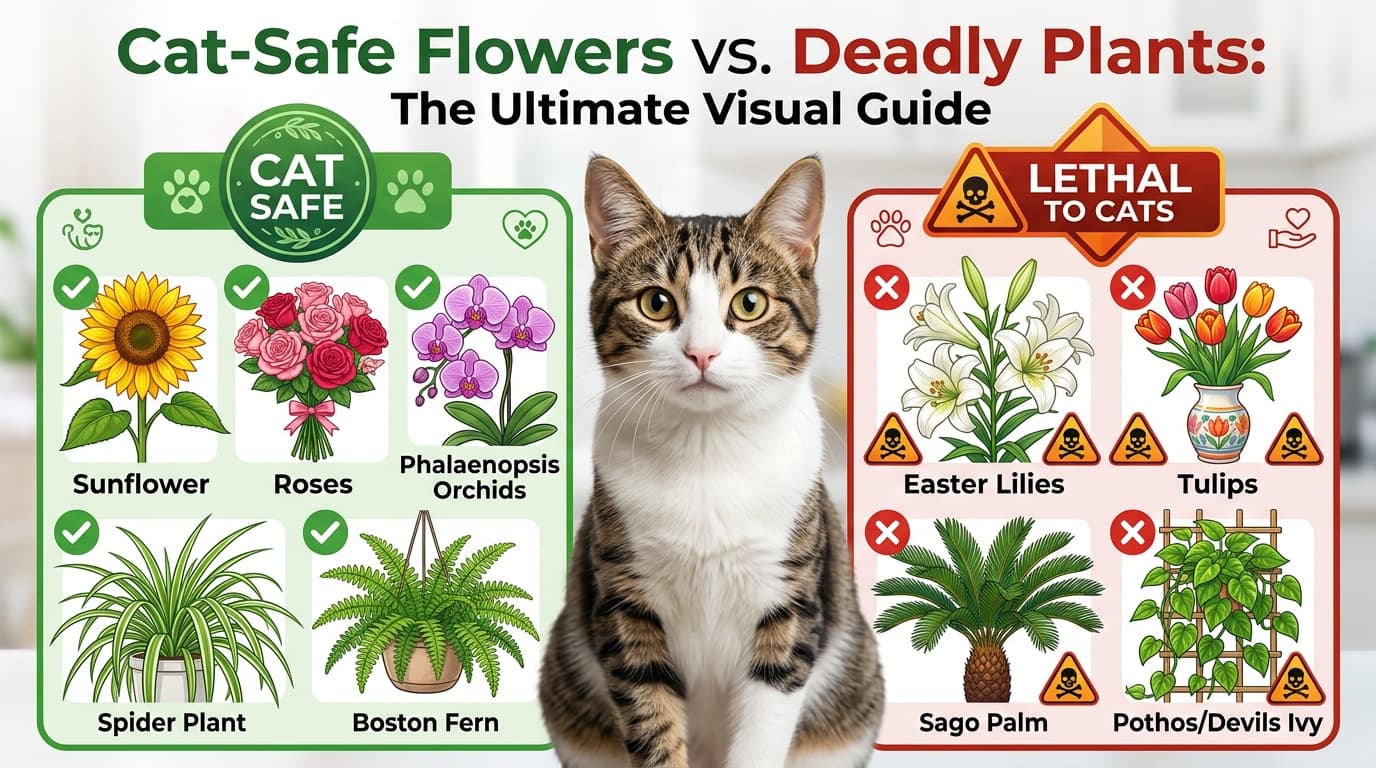
Cat-Safe Flowers vs Deadly Plants Visual Guide Infographic
Botanical safety guide: Sunflowers, roses, and orchids are completely feline-safe, while true lilies, tulips, and sago palms pose fatal toxicity hazards.
Educational guide only. This article does not replace a veterinary exam, diagnosis, or emergency care.

Quick Summary: Cat-Safe Flowers vs. Deadly Botanical Hazards

Not all plants pose the same level of risk to felines. Toxicity ranges from mild oral mechanical irritation to rapidly fatal organ failure. Knowing how to identify safe vs. toxic botanical species before bringing them through your front door is the single most effective way to safeguard your cat.

True lilies (such as Easter, Stargazer, Asiatic, and Tiger lilies) are so exceptionally toxic to felines that even brushing against a petal, licking pollen from fur, or drinking water from the flower vase causes catastrophic acute kidney failure. In contrast, roses, sunflowers, phalaenopsis orchids, and spider plants can be enjoyed safely with zero toxic risk.

Checklist

  • Top Cat-Safe Flowers: Sunflowers, True Roses (Rosa spp.), Phalaenopsis Orchids, Freesias, Lisianthus, and Snapdragons.
  • Top Cat-Safe Houseplants: Spider Plants, Boston Ferns, Calatheas (Prayer Plants), African Violets, and Peperomias.
  • Top Deadly Plants (Ban Immediately): True Lilies & Daylilies (acute kidney necrosis), Sago Palms (fatal liver failure), Oleander & Foxglove (cardiac arrest), and Autumn Crocus (multi-organ failure).
  • Common Irritants (Insoluble Oxalates): Pothos, Monstera, Peace Lilies, and Philodendrons cause intense oral pain, drooling, and vomiting, but are rarely fatal.
The Top 10 Cat-Safe Flowers & Houseplants (100% Non-Toxic Greenery)

If you want to keep vibrant flowers or lush houseplants in your home without worrying about emergency vet trips, choose from these clinically verified feline-safe species:

Checklist

  • 1. Sunflowers (Helianthus annuus): Bright, cheerful, and 100% non-toxic to cats. Both petals and leaves are completely safe if your cat nibbles on them.
  • 2. Garden Roses (Rosa species): True roses are non-toxic to cats. Note: Always remove sharp thorns before placing bouquets in reach of curious paws to prevent mechanical scratches.
  • 3. Phalaenopsis Orchids (Moth Orchids): Stunning, long-lasting blooms that are entirely non-toxic to felines, making them an ideal luxury indoor plant.
  • 4. Freesias: Highly fragrant, delicate bell-shaped flowers that make wonderful cat-safe bouquet centerpieces.
  • 5. Lisianthus (Eustoma): Often used in bouquets as a lush, rose-like alternative, lisianthus is completely non-toxic.
  • 6. Snapdragons (Antirrhinum majus): Colorful, tall flower spikes that are completely safe for cats and dogs.
  • 7. Spider Plants (Chlorophytum comosum): A hardy, air-purifying houseplant that is non-toxic. (Note: Spider plants produce mild opium-like compounds that give cats a harmless mild euphoria, making them a favorite chewing target).
  • 8. Boston Ferns (Nephrolepis exaltata): Lush hanging ferns that are safe for pets. (Do not confuse with Asparagus Fern, which is mildly toxic).
  • 9. Calathea / Maranta (Prayer Plants): Beautiful patterned leaves that fold up at night, completely non-toxic to cats.
  • 10. African Violets (Saintpaulia): Compact indoor blooming plants with soft fuzzy leaves that are 100% pet-safe.

The True Lily Emergency: Why Lilies Are the #1 Botanical Hazard for Cats

True lilies belonging to the Lilium genus (Easter lilies, Stargazer lilies, Asiatic lilies, Tiger lilies, Oriental hybrid lilies, and Rubrum lilies) and Daylilies (Hemerocallis genus) are the deadliest plants for felines. Unlike other toxins where dosage dictates severity, lilies possess no safe threshold for cats.

Every single part of a true lily—the petals, leaves, stem, sepals, pollen, and even the water in the vase—contains an unidentified water-soluble phytotoxin that specifically destroys feline renal tubular epithelial cells.

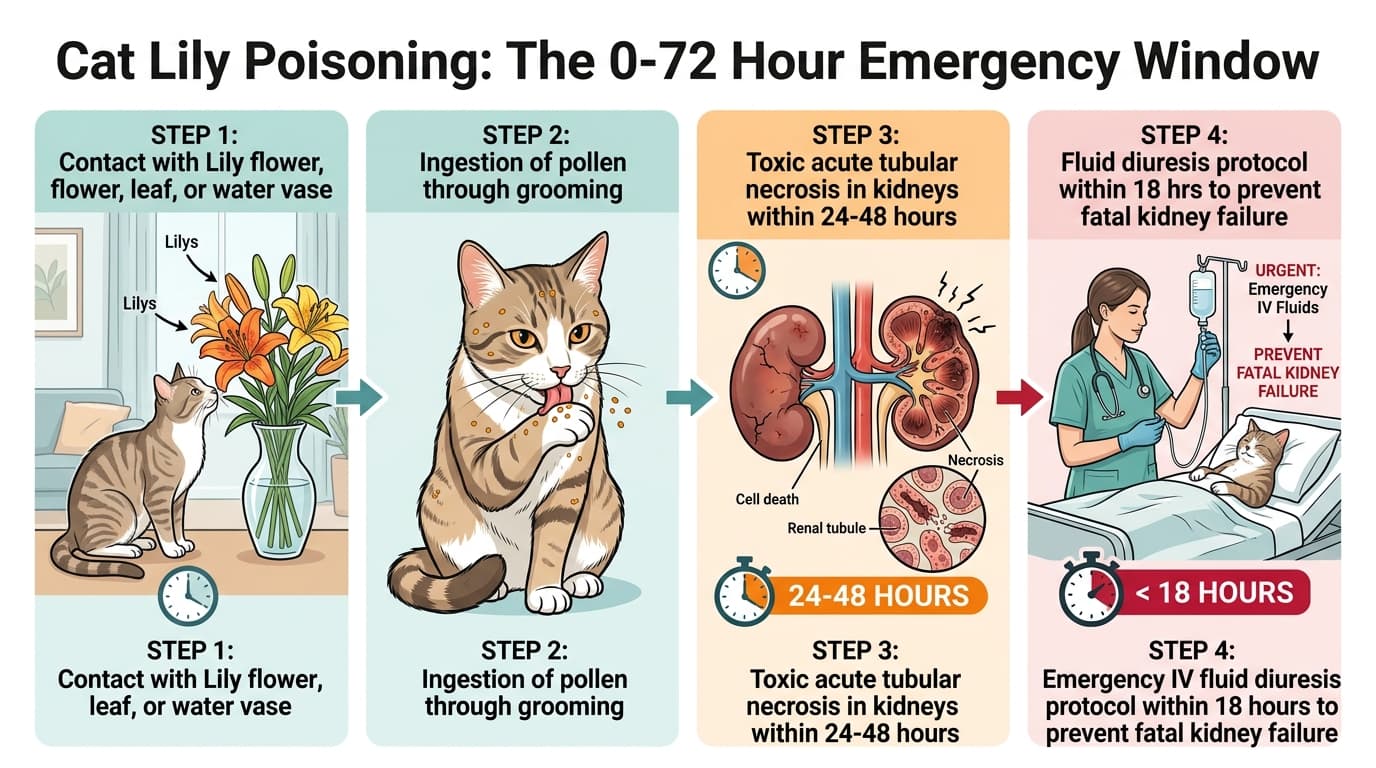
The Deadly Exposure Mechanism: If a cat brushes against a lily in a floral arrangement, orange pollen dusts their whiskers or coat. When the cat grooms itself, ingesting even 1 or 2 microscopic pollen grains, the toxin rapidly enters the bloodstream. Within 12 to 24 hours, renal epithelial cells undergo severe necrosis. Without aggressive IV fluid diuresis initiated within 18 hours of exposure, severe anuric renal failure (inability to produce urine), uremic encephalopathy, and death occur within 3 to 7 days.

Note on 'Peace Lilies' and 'Calla Lilies': Despite their common names, Peace Lilies (Spathiphyllum) and Calla Lilies (Zantedeschia) are not true lilies. They contain insoluble calcium oxalate crystals rather than the fatal lily nephrotoxin. While they cause painful oral swelling, drooling, and vomiting, they do not cause acute kidney failure.

Cat Lily Poisoning Emergency Timeline and Decontamination Protocol
Lily toxicity progression: Pollen grooming triggers acute renal tubular necrosis within 24-48 hours. Aggressive IV fluid diuresis within the first 18 hours is critical to prevent fatal kidney shutdown.

The 10 Most Common Toxic Houseplants & Flowers to Avoid

Before buying bouquets or indoor potted plants, make sure none of these common toxic species enter your home:

Checklist

  • 1. True Lilies & Daylilies (Lilium & Hemerocallis spp.): EXTREMELY DEADLY. Causes irreversible acute kidney failure from minimal exposure.
  • 2. Sago Palm (Cycas revoluta): EXTREMELY DEADLY. Contains cycasin; just 1 or 2 seeds cause severe hemorrhagic gastroenteritis, hepatic failure, and death in over 50% of cases.
  • 3. Tulips & Daffodils (Tulipa & Narcissus spp.): High toxicity, especially the underground bulbs. Contain tulipalin and lycorine, causing severe vomiting, diarrhea, cardiac arrhythmias, and respiratory distress.
  • 4. Autumn Crocus (Colchicum autumnale): EXTREMELY TOXIC. Contains colchicine, causing multi-organ failure, gastrointestinal hemorrhage, and bone marrow suppression.
  • 5. Pothos / Devil's Ivy (Epipremnum aureum): Moderate toxicity. Contains needle-like insoluble calcium oxalate crystals (raphides) that shoot into oral mucosa, causing severe burning, swelling, and drooling.
  • 6. Monstera Deliciosa & Philodendron: Moderate toxicity. Rich in insoluble calcium oxalates, leading to intense oral pain, vomiting, and dysphagia (difficulty swallowing).
  • 7. Oleander & Foxglove: EXTREMELY DEADLY. Contain cardiac glycosides (oleandrin and digitoxin) that cause lethal bradycardia, electrolyte imbalances, and cardiac arrest.
  • 8. Dieffenbachia (Dumb Cane): Moderate to severe. High oxalate concentrations cause intense tongue and vocal cord swelling that can obstruct breathing.
  • 9. Azaleas & Rhododendrons: High toxicity. Contain grayanotoxins that disrupt cellular sodium channels, causing cardiovascular collapse and comas.
  • 10. Eucalyptus & Essential Oil Plants: Moderate toxicity. Volatile terpenes and aromatic oils irritate the gastrointestinal tract and cause neurological depression and liver strain.

Clinical Plant Toxicity Matrix: Species, Toxins, Target Organs & Danger Level

Use this comprehensive veterinary reference matrix to evaluate botanical hazards, toxic mechanisms, and emergency urgency:

Plant / Flower Name

Easter / Stargazer Lilies

Primary Toxic Mechanism / Molecule

Water-soluble nephrotoxin (unidentified)

Primary Target Organ

Kidneys (Renal Tubular Necrosis)

Onset of Symptoms

2 to 6 hours

Clinical Danger Level

LETHAL EMERGENCY: 24/7 ER immediately

Plant / Flower Name

Sago Palm (Cycads)

Primary Toxic Mechanism / Molecule

Cycasin / Methylazoxymethanol

Primary Target Organ

Liver (Acute Hepatic Necrosis)

Onset of Symptoms

15 mins to 12 hours

Clinical Danger Level

LETHAL EMERGENCY: 24/7 ER immediately

Plant / Flower Name

Oleander & Foxglove

Primary Toxic Mechanism / Molecule

Cardiac Glycosides (Oleandrin / Digitoxin)

Primary Target Organ

Heart (Myocardial Conduction)

Onset of Symptoms

30 mins to 2 hours

Clinical Danger Level

LETHAL EMERGENCY: 24/7 ER immediately

Plant / Flower Name

Tulips & Daffodils

Primary Toxic Mechanism / Molecule

Tulipalin A/B & Lycorine Alkaloids

Primary Target Organ

Gastrointestinal & Cardiovascular

Onset of Symptoms

2 to 4 hours

Clinical Danger Level

HIGH: Urgent veterinary exam needed

Plant / Flower Name

Autumn Crocus

Primary Toxic Mechanism / Molecule

Colchicine (Mitotic Spindle Poison)

Primary Target Organ

Multi-Organ System & Bone Marrow

Onset of Symptoms

2 to 24 hours

Clinical Danger Level

LETHAL EMERGENCY: 24/7 ER immediately

Plant / Flower Name

Pothos / Philodendron

Primary Toxic Mechanism / Molecule

Insoluble Calcium Oxalate Raphides

Primary Target Organ

Oral Mucosa & Upper GI Tract

Onset of Symptoms

Immediate (on chewing)

Clinical Danger Level

MODERATE: Flush mouth & consult vet

Plant / Flower Name

Sunflowers & Roses

Primary Toxic Mechanism / Molecule

None (Non-Toxic species)

Primary Target Organ

None (Safe)

Onset of Symptoms

N/A

Clinical Danger Level

100% SAFE: Feline-friendly plant

Symptoms of Plant Poisoning: What to Watch for After Ingestion

Because cats often chew plants while owners are away, look for these physical and behavioral markers of plant ingestion:

Checklist

  • Oral Irritation & Hypersalivation: Profuse drooling, foaming at the mouth, pawing frantically at the lips, and refusing food due to burning oxalate crystals.
  • Gastrointestinal Distress: Acute vomiting (often containing masticated plant leaves, petals, or colored stems), nausea, dry heaving, and liquid diarrhea.
  • Neurological Dysfunction: Ataxia (wobbly, drunken gait), disorientation, muscle tremors, dilated pupils, or sudden seizures.
  • Cardiovascular & Respiratory Signs: Rapid breathing, wheezing, pale or brick-red gums, dangerously low heart rate (bradycardia), or sudden collapse.
  • Renal Crisis Markers (Lily Poisoning): Initial vomiting and lethargy in the first 12 hours, followed by excessive drinking/urination (polyuria/polydipsia), progressing to complete lack of urine production (anuria), halitosis (ammonia breath), and severe uremic coma.

Emergency Action Protocol: What to Do If Your Cat Eats a Toxic Plant

If you catch your cat chewing a toxic plant or suspect ingestion, execute this emergency protocol immediately:

1. Remove All Plant Material From Mouth & Coat: Gently take away any remaining stems from their mouth. If the plant is a lily, use a damp cloth to thoroughly wipe all orange pollen off their whiskers, paws, and face so they do not groom and ingest it.

2. Photograph or Bag the Plant: Take a clear, high-resolution photo of the plant, flower, and leaves, or place a sample in a sealed plastic bag. Accurate botanical identification allows veterinarians to initiate specific antidotes or decontamination protocols immediately.

3. Call Pet Poison Control or Emergency Hospital: Call the ASPCA Animal Poison Control Center (888-426-4435) or your nearest 24/7 emergency veterinary hospital while en route.

4. NEVER Induce Vomiting at Home: Unlike dogs, cats cannot safely be given hydrogen peroxide or salt to induce vomiting; doing so causes severe hemorrhagic gastritis, esophageal strictures, and fatal aspiration. Veterinary teams use injectable alpha-2 agonists (like Dexmedetomidine) that safely and reliably induce emesis in cats within minutes.

5. Clinical Inpatient Care: For high-toxicity plants (lilies, sago palms), your cat will require hospitalization for 48 to 72 hours of high-rate IV crystalloid fluid diuresis to flush toxins through the kidneys, repeated doses of activated charcoal to bind circulating metabolites, and daily point-of-care renal chemistry monitoring (BUN/Creatinine/SDMA).

Home Prevention & Safe Enrichment: Cat Grass, Feline Pheromones, and Gut Health

Cats possess a natural instinct to chew fibrous vegetation to assist with digestion and hairball elimination. Satisfy this instinct safely with these preventative strategies:

1. Grow Fresh, Organic Cat Grass: Provide pots of fresh wheatgrass, oat grass, barley, or catnip. This provides safe, non-toxic fiber that keeps cats entertained and prevents them from targeting decorative houseplants.

2. Switch Exclusively to Verified Non-Toxic Bouquets: Always instruct florists that your arrangement must be 100% pet-safe with ZERO lilies, baby's breath, or toxic greenery.

3. Utilize Elevated & Hanging Planters: Keep safe plants in ceiling-mounted macramé hangers or high wall shelves out of jumping range.

4. Address Boredom & Stress: Pica (the compulsive chewing of non-food items like leaves) is frequently triggered by environmental boredom or anxiety. Provide vertical cat trees, interactive puzzle feeders, and use synthetic feline facial pheromones (Feliway).

5. Support Gut-Mucosal Resilience: If your cat has experienced digestive irritation or hairball issues, adding a feline-specific probiotic restores beneficial microflora, strengthens the mucosal barrier, and promotes steady digestive motility — learn more in our Cat Gut Health Guide.

Frequently Asked Questions

Sunflowers, true garden roses, phalaenopsis orchids, freesias, snapdragons, and lisianthus are 100% non-toxic and safe for cat-friendly households.

All 'true lilies' (Lilium genus including Easter, Stargazer, Asiatic, and Tiger lilies) and Daylilies (Hemerocallis) are fatally nephrotoxic to cats. Even tiny amounts of pollen or vase water cause irreversible acute kidney failure. Other plants called 'lilies' (like Peace Lilies and Calla Lilies) are not true lilies; they cause painful oral irritation from oxalates but not kidney shutdown.

Licking even 1 or 2 microscopic pollen grains during grooming causes acute renal tubular necrosis. Without immediate veterinary IV fluid diuresis within 18 hours, severe kidney failure, anuria, and death occur within 3 to 7 days.

No. True roses (Rosa species) are completely non-toxic to cats. However, you should clip off the sharp thorns before displaying bouquets to prevent mouth, lip, or paw scratches.

Yes, but only if aggressive veterinary treatment (emesis, activated charcoal, and continuous IV fluid diuresis for 48 to 72 hours) is started within the first 18 hours of exposure before permanent renal failure develops.

Cats chew plants due to instinctual drives for dietary fiber to pass hairballs, playful curiosity with fluttering leaves, or underlying nutritional deficiencies and stress-induced pica.

Common signs include profuse drooling, mouth pawing, acute vomiting, diarrhea, lethargy, loss of appetite, ataxia, dilated pupils, changes in urination frequency, and seizures.

Remove remaining plant matter from their mouth, wipe pollen from their fur, take a photo of the plant for identification, and call the ASPCA Animal Poison Control Center at (888) 426-4435 or your nearest 24/7 emergency veterinary hospital immediately.