🐾Pawbiotics

Dogs

Why Does My Dog Keep Shaking Their Head? Ear Infections, Yeast, and Care Steps

Published 2026-08-3010 min read

If your dog is vigorously shaking their head, flapping their ears, scratching behind their neck, or tilting their head to one side, they are responding to localized discomfort, intense itching, or physical irritation inside their ear canal. While a quick shake after waking up or swimming is normal canine behavior, persistent, repetitive head shaking is the single most common clinical sign of otitis externa (outer ear inflammation). Dogs have a deep, L-shaped ear canal that easily traps moisture, heat, and wax—creating the perfect anaerobic breeding ground for yeast (Malassezia pachydermatis) and opportunistic bacteria. Understanding what causes your dog's head shaking, how to recognize the danger of a swollen aural hematoma, and how to safely clean canine ears without damaging the delicate tympanic membrane is essential for fast, lasting relief.

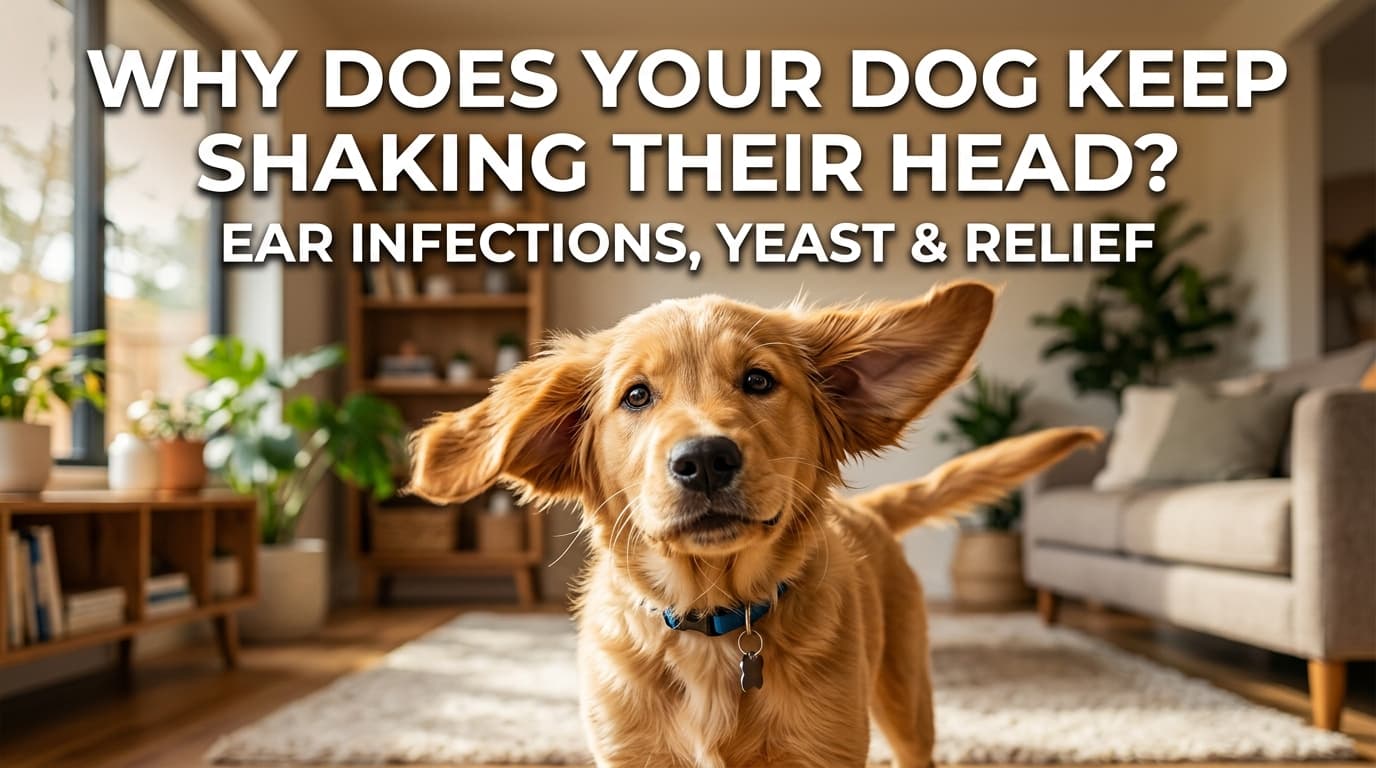
Why Does Your Dog Keep Shaking Their Head? Ear Infections, Yeast & Relief
Frequent head shaking and ear flapping in dogs is usually triggered by yeast overgrowth, bacterial otitis, ear mites, or trapped moisture.
Educational guide only. This article does not replace a veterinary exam, diagnosis, or emergency care.

Quick Summary: Why Dogs Repeatedly Shake Their Heads

Occasional head shaking is normal, but repeated, violent head shaking accompanied by ear flapping, whining, or pawing at the ears signals inflammation (otitis), infection, or a foreign object lodged in the ear canal.

Because the canine ear canal is shaped like an 'L' with a deep vertical descent before turning horizontally toward the eardrum, dogs cannot dislodge deep debris or fluid on their own. Leaving ear infections untreated can lead to chronic ear canal narrowing (stenosis), middle ear infection (otitis media), and painful blood blisters inside the ear flap known as aural hematomas.

Checklist

  • Most Common Culprit: Yeast overgrowth (Malassezia), characterized by a musty sweet 'corn-chip' smell and dark brown waxy discharge.
  • Bacterial Warning: Putrid or sour odor with yellow, green, or bloody discharge indicates a bacterial otitis requiring prescription topical antibiotics.
  • Aural Hematoma Danger: Violent head flapping can rupture blood vessels in the ear flap, creating a painful, swollen 'pillow ear' that requires veterinary drainage.
  • Cleaning Golden Rule: Always use a vet-approved ear flush; NEVER insert cotton-tipped swabs (Q-tips), rubbing alcohol, vinegar, or hydrogen peroxide into your dog's ear canal.
Canine Ear Anatomy: Why Dogs Are Prone to Ear Canal Infections

Human ear canals are straight and horizontal, allowing water and cerumen (earwax) to drain naturally. Dogs, however, possess a complex anatomical structure that predisposes them to chronic ear problems:

Checklist

  • The 'L-Shaped' Ear Canal: The canine ear canal travels vertically downwards before making a sharp 90-degree right angle horizontally toward the tympanic membrane (eardrum). This anatomical bend traps moisture, debris, sloughed skin cells, and wax at the bottom of the canal.
  • Warm, Dark, Anaerobic Environment: The deep canal maintains high humidity and warm body temperatures—the ideal microenvironment for microscopic yeast and bacteria to proliferate rapidly.
  • Pendulous (Floppy) Ear Flaps: Breeds with heavy, hanging ear flaps (Golden Retrievers, Labrador Retrievers, Cocker Spaniels, Basset Hounds) have restricted airflow, preventing the ear canal from drying out.
  • Hairy Ear Canals: Poodles, Doodles, Schnauzers, and Bichons grow dense hair directly inside the ear canal, which traps excess cerumen and clogs natural drainage pathways.

The 5 Most Common Causes of Canine Head Shaking

Determining the exact cause of your dog's discomfort is crucial for applying the correct treatment:

Checklist

  • 1. Yeast Otitis Externa (Malassezia): The #1 cause of itchy dog ears. Yeast is a normal inhabitant of canine skin, but when moisture, heat, or allergic inflammation spikes, yeast multiplies uncontrollably. Hallmark signs: Intense itching, red thickened skin, greasy dark brown/black discharge, and a distinct sweet, musty 'Fritos / corn-chip' or sourdough smell.
  • 2. Bacterial Ear Infections: Opportunistic bacteria (such as Staphylococcus pseudintermedius, Pseudomonas, or Proteus) invade inflamed ear tissue. Hallmark signs: Severe pain, ulcerated skin, yellow or green purulent pus, swelling, and a pungent, foul rotting odor.
  • 3. Ear Mites (Otodectes cynotis): Highly contagious microscopic parasites that feed on epidermal debris and earwax, most common in puppies, outdoor dogs, and rescue animals. Hallmark signs: Violent head shaking, intense scratching, and dry, crumbly black discharge resembling coffee grounds.
  • 4. Foreign Bodies (Foxtails & Grass Awns): Plant awns, foxtails, burrs, or dirt particles can enter the ear during walks. Foxtails have sharp microscopic barbs that ratchet deeper into the canal with every head shake, potentially puncturing the eardrum.
  • 5. Post-Swimming / Bathing Water Trapping: Water trapped in the deep horizontal canal macerates the epithelial skin lining, breaking down the lipid protective barrier and initiating acute bacterial or yeast bloom within 24 to 48 hours.

Clinical Diagnostic Matrix: Discharge Color, Odor, Symptoms & Treatment

Use this veterinary reference matrix to identify the type of ear problem affecting your dog:

Underlying Condition

Yeast Otitis (Malassezia)

Discharge Appearance

Greasy, dark brown / black wax

Distinctive Odor Profile

Sweet, musty 'corn-chip' / sourdough

Key Behavioral Symptoms

Constant head shaking, scratching ears

Primary Veterinary Treatment

Topical antifungal drops (Clotrimazole/Miconazole)

Underlying Condition

Bacterial Infection

Discharge Appearance

Yellow, green, or creamy pus

Distinctive Odor Profile

Foul, sour, or rotting smell

Key Behavioral Symptoms

Severe pain, whining, red hot ear canal

Primary Veterinary Treatment

Topical antibiotic drops + anti-inflammatory steroids

Underlying Condition

Ear Mites (Otodectes)

Discharge Appearance

Dry, crumbly black 'coffee grounds'

Distinctive Odor Profile

Mild or no distinct odor

Key Behavioral Symptoms

Frenzied scratching, rubbed raw behind ears

Primary Veterinary Treatment

Topical isoxazoline antiparasitic medications

Underlying Condition

Foreign Body (Foxtail)

Discharge Appearance

Clear serum progressing to blood/pus

Distinctive Odor Profile

None initially, foul if infected

Key Behavioral Symptoms

Sudden violent head shake, tilting head

Primary Veterinary Treatment

Otoscopic examination & foreign body forceps extraction

Underlying Condition

Aural Hematoma

Discharge Appearance

None in canal (swollen outer flap)

Distinctive Odor Profile

None (unless concurrent infection)

Key Behavioral Symptoms

Heavy, fluid-filled 'pillow ear', ear drooping

Primary Veterinary Treatment

Veterinary needle aspiration, drainage, or surgical quilting

The Aural Hematoma Danger: Why Violent Flapping Causes 'Pillow Ear'

When a dog shakes their head violently, their heavy ear flaps slap forcefully against the top of their skull. This high-velocity impact can shear the delicate blood vessels running between the skin and cartilage layers of the pinna (ear flap).

What Happens During an Aural Hematoma:

1. Rapid Fluid Accumulation: Blood pools rapidly within the space of a few hours, causing the ear flap to swell into a tense, warm, fluid-filled mass resembling a thick water balloon or ravioli ('pillow ear').

2. Extreme Discomfort: The weight of the swollen hematoma pulls painfully on the ear base, causing the dog to tilt their head and continue shaking, worsening the bleeding.

3. The Risk of 'Cauliflower Ear': If left untreated without veterinary drainage, the blood clot will slowly organize and fibrillate, contracting into a permanently scarred, thickened, crinkled 'cauliflower ear' that obstructs the ear canal and predisposes the dog to lifelong recurrent infections.

4. Treatment Protocol: Veterinarians treat hematomas via sterile needle aspiration with steroid infusion, indwelling drain placement, or surgical incisional drainage with through-and-through quilting sutures.

How to Safely Clean Your Dog's Ears at Home (Step-by-Step)

Routine, gentle ear cleaning removes excess wax, dries moisture after swimming, and prevents microbial overgrowth. Follow this 5-step veterinary protocol:

Step 1: Choose a High-Quality Veterinary Ear Cleanser: Use a veterinary-formulated cleanser with gentle drying agents (like salicylic acid or phytosphingosine) and antimicrobial properties. NEVER use rubbing alcohol, hydrogen peroxide, or vinegar, which burn inflamed tissue and dry out the canal.

Step 2: Fill the Vertical Canal: Gently hold the ear flap upright and pour the liquid cleanser into the ear canal opening until you see the fluid level rise to the top.

Step 3: Massage the Ear Base for 30 Seconds: Grasp the base of the ear just below the opening (where you feel cartilage tubes) and massage gently. You should hear a distinct wet 'squish-squish' sound as the cleanser breaks up deep debris in the horizontal canal.

Step 4: Let Your Dog Shake: Step back and allow your dog to shake their head vigorously. Centrifugal force brings loosened wax, debris, and excess fluid up from the deep canal into the outer ear flap.

Step 5: Wipe Clean with Cotton Balls: Use a dry cotton ball, cotton pad, or soft gauze to gently wipe away dislodged debris and excess moisture from the outer ear flap and canal opening.

CRITICAL SAFETY WARNING: NEVER insert cotton-tipped applicator swabs (Q-tips) down into your dog's ear canal. Q-tips pack debris deeper against the eardrum and can easily rupture the delicate tympanic membrane.

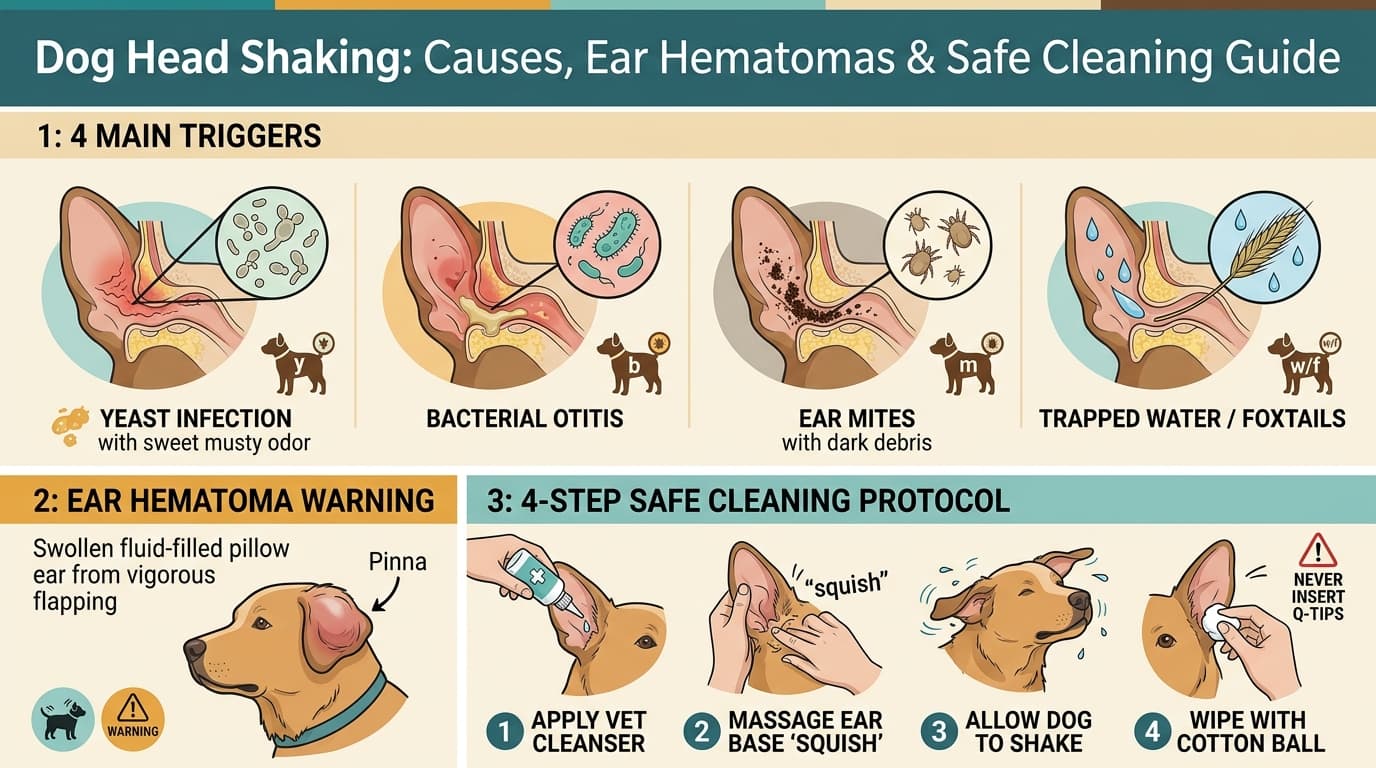
Dog Head Shaking: Causes, Ear Hematomas, and Safe Cleaning Guide Infographic
Clinical ear guide: Compare yeast vs bacterial otitis vs ear mites. Avoid violent flapping to prevent aural hematomas ('pillow ear'), and follow the 4-step flush-and-massage cleaning protocol.

When to See a Veterinarian: Red Flag Warning Signs

While mild wax buildup can be cleaned at home, schedule an immediate veterinary exam if you notice any of these serious clinical warning signs:

1. Persistent Head Tilt & Loss of Balance: If your dog tilts their head constantly to one side, stumbles, walks in circles, or exhibits abnormal flickering eye movements (nystagmus), the infection may have penetrated the middle or inner ear (otitis media / interna), affecting the vestibular balance system.

2. Extreme Pain or Aggression: Crying out, snapping, or hiding when anyone touches their head or collar.

3. Swollen, Narrowed Ear Canal (Stenosis): The ear canal opening is swollen shut, cobblestone-textured, ulcerated, or actively bleeding.

4. Purulent Green/Yellow Discharge: Thick foul-smelling pus requiring prescription cytological evaluation (ear swab under microscope) and targeted antibiotic or antifungal therapy.

Root-Cause Management: Food Allergies, Gut-Skin Axis & Probiotics

In over 80% of dogs with chronic, recurrent bilateral ear infections, the ears are not the primary problem—they are simply the outward manifestation of systemic allergic disease.

1. Cutaneous Adverse Food Reactions: Food allergies (most commonly to beef, chicken, dairy, wheat, or soy proteins) trigger allergic histamine release that inflames the skin barrier inside the ears.

2. Atopic Dermatitis (Environmental Allergens): Inhaled or contact allergies to pollen, dust mites, and mold weaken the cutaneous microbiome.

3. Support the Gut-Skin-Ear Axis: Over 70% of the canine immune system resides in the gut-associated lymphoid tissue (GALT). Adding a multi-strain canine probiotic strengthens the mucosal barrier, downregulates systemic inflammatory pathways, and helps prevent yeast overgrowth on the skin and ears — learn more in our Dog Probiotics for Digestion Guide.

4. Balanced Nutrition & Caloric Portioning: Use our Dog Food Portion Calculator to ensure optimal daily nutrition and avoid inflammatory fillers.

Frequently Asked Questions

Dogs have a deep horizontal ear canal that you cannot see without an otoscope. An infection, trapped water, a tiny foxtail grass awn, or early yeast proliferation can sit deep against the eardrum with no visible dirt on the outer ear flap.

Canine ear yeast infections (Malassezia) produce a distinct, sweet, pungent, musty odor often compared to corn chips, Fritos, stale beer, or sourdough bread.

No. Never put alcohol, hydrogen peroxide, or undiluted vinegar in your dog's ears. These chemicals cause extreme burning, tissue ulceration, and can cause permanent deafness if the eardrum is ruptured. Always use a veterinarian-approved ear flush.

Treat ear itching and head shaking promptly before violent ear flapping ruptures the blood vessels in the pinna. You can also use a soft head wrap (like a Happy Hoodie or snood) to keep ear flaps flat against the head while waiting for a vet appointment.

For healthy dogs, cleaning once every 2 to 4 weeks is sufficient. For dogs with floppy ears, swimming habits, or chronic allergies, clean once weekly or immediately after swimming and bathing.

Yes. Food allergies (typically to animal proteins like chicken or beef) are one of the leading underlying causes of recurrent, bilateral ear yeast and bacterial infections in dogs.

Water easily flows into the vertical ear canal and becomes trapped in the horizontal canal. Dogs shake their heads vigorously to use centrifugal force to expel the trapped water.

Seek urgent veterinary care if head shaking is accompanied by a severe head tilt, loss of balance, walking in circles, extreme pain, green foul-smelling pus, or a rapidly swelling ear flap (aural hematoma).