🐾Pawbiotics

Dogs

Dog Reverse Sneezing: What It Sounds Like, Causes, and How to Stop an Episode

Published 2026-08-309 min read

If your dog has suddenly frozen in place, stretched their neck outward, flared their elbows, and started making rapid, violent snorting or honking noises through their nose, you are likely witnessing an episode of reverse sneezing. Scientifically known as paroxysmal respiration or mechanosensitive nasopharyngeal reflex, reverse sneezing is a common respiratory spasm that sounds terrifying—often causing panicked owners to believe their dog is choking, suffering an asthma attack, or suffocating. While a true reverse sneeze is completely harmless and self-limiting, understanding what triggers these nasopharyngeal spasms, how to instantly stop an episode using gentle acupressure and swallowing reflexes, and how to distinguish paroxysmal respiration from serious conditions like tracheal collapse or kennel cough is essential for every dog parent.

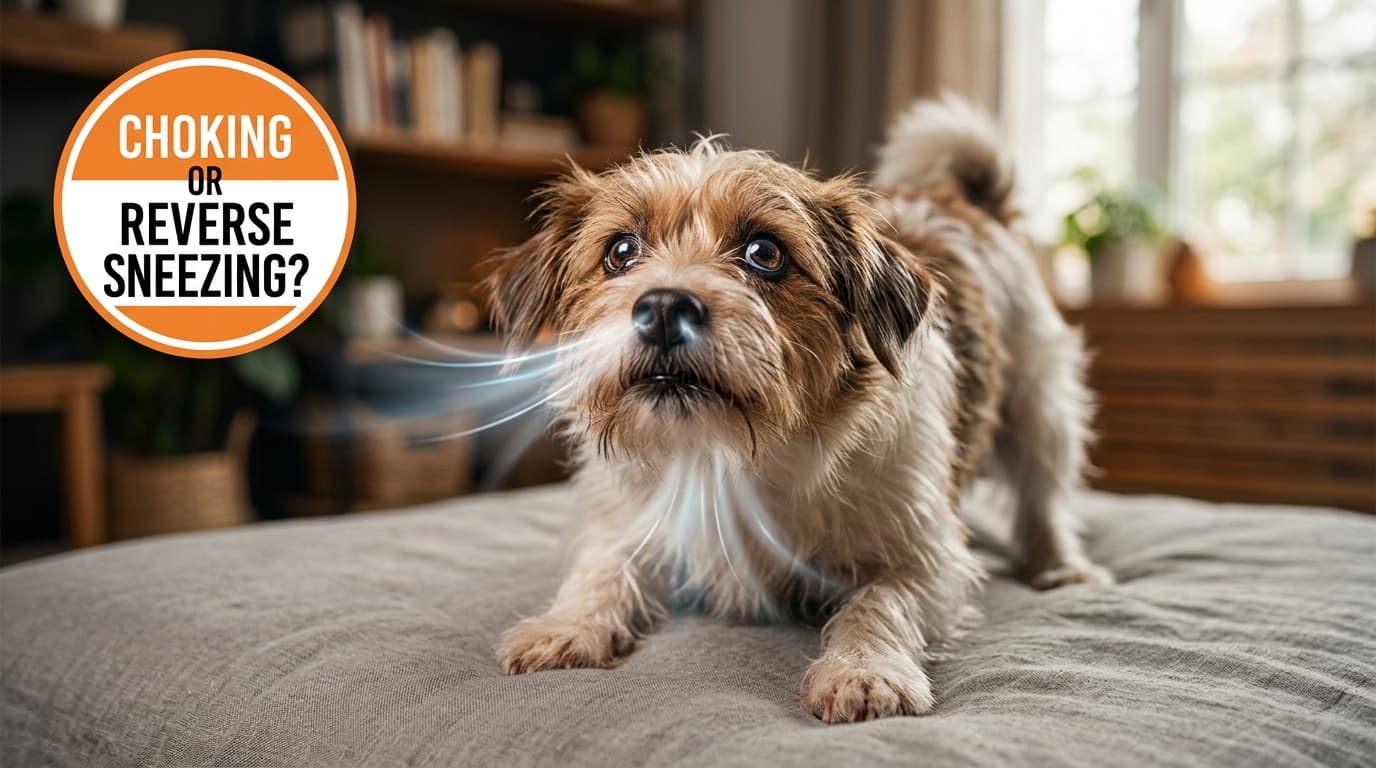
Dog Reverse Sneezing Hook: Is Your Dog Choking or Reverse Sneezing?
Reverse sneezing is a sudden, loud inward nasal spasm (paroxysmal respiration) that often resembles choking or honking, but is usually completely harmless.

Compare with similar cat symptom guides: Why is my cat breathing heavy?, Cat cold symptoms.

Educational guide only. This article does not replace a veterinary exam, diagnosis, or emergency care.

Quick Summary: What Is a Dog Reverse Sneeze?

A reverse sneeze occurs when a dog rapidly pulls air inward through the nose rather than expelling it outward like a normal sneeze. This sudden inhalation creates a loud, rhythmic snorting or honking sound as air rushes past an irritated soft palate and nasopharynx.

While an episode looks and sounds alarming, reverse sneezing is not painful, does not damage lung tissue, and does not cause suffocation. Most episodes resolve completely on their own within 15 to 60 seconds with no lasting medical consequences.

Checklist

  • Medical Term: Inspiratory Paroxysmal Respiration or Mechanosensitive Nasopharyngeal Reflex.
  • Primary Hallmark: Rapid, rhythmic inward snorts with outstretched neck, wide eyes, and expanded ribcage.
  • Fastest Relief Method: Gently cover both nostrils for 2 seconds to force mouth opening and trigger a swallow reflex.
  • Emergency Warning: If gums turn blue (cyanosis), the dog collapses, or coughing sounds like a harsh dry honk on exhalation, seek immediate veterinary care.
The Science: What Causes Paroxysmal Respiration in Dogs?

The canine upper respiratory tract is lined with sensitive sensory nerve endings. When the mucosal lining of the nasopharynx—the passage connecting the nasal cavity to the throat—becomes irritated, it triggers a rapid reflex spasm in the surrounding pharyngeal musculature and soft palate.

Key anatomical and environmental drivers of reverse sneezing include:

Checklist

  • Soft Palate Spasm: When the soft palate becomes inflamed, it temporarily drops downward into the airway. As the dog inhales, the elongated tissue vibrates vigorously against the larynx, generating the characteristic loud snort.
  • Brachycephalic Airway Conformation: Flat-faced breeds (French Bulldogs, English Bulldogs, Pugs, Boxers, and Boston Terriers) frequently have elongated soft palates and narrowed stenotic nares, making them highly susceptible to frequent episodes.
  • Small Breed Predisposition: Small dogs with compact throats (Yorkshire Terriers, Chihuahuas, Miniature Pinschers, and Beagles) experience frequent spasms due to smaller pharyngeal airway volume.
  • Environmental Irritants: Airborne allergens, household cleaning sprays, incense, cigarette smoke, powdery carpet deodorizers, and pollen frequently trigger localized nasopharyngeal inflammation.

What Does Reverse Sneezing Sound & Look Like? (The Anatomy of an Episode)

Recognizing the physical presentation of a reverse sneeze helps pet parents stay calm and assist their dog effectively:

1. Sudden Postural Freeze: The dog stops walking, plants their feet firmly on the ground, spreads their front elbows wide, and extends their head and neck in a straight horizontal line.

2. Rhythmic Nasal Heaving: The ribcage expands forcefully with each rapid inward breath. The mouth remains tightly shut, forcing all air through the nasal passages.

3. Loud Snorting / Honking Sound: Air moving across the vibrating soft palate produces a loud, rhythmic sound often compared to a pig snort, a goose honk, or asthma wheezing.

4. Immediate Return to Normalcy: As soon as the spasm subsides—often accompanied by a single distinct swallow—the dog immediately resumes normal breathing, wags their tail, and goes back to playing with zero residual fatigue or pain.

Reverse Sneezing vs. Tracheal Collapse vs. Choking: Key Differences

Because respiratory sounds can be ambiguous, use this veterinary differential guide to determine whether your dog is reverse sneezing or suffering from a serious medical emergency:

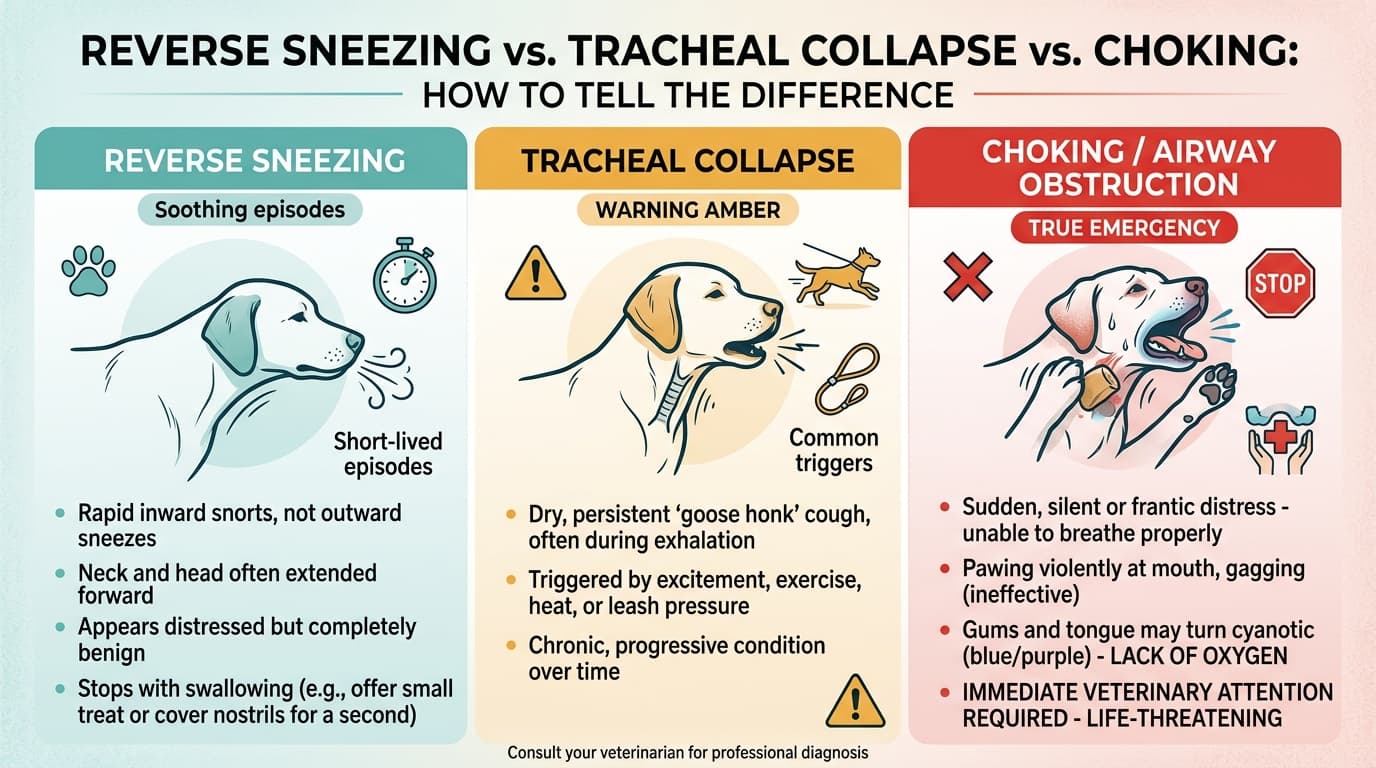
Reverse Sneezing vs Tracheal Collapse vs Choking Comparison Chart
Diagnostic breakdown: Reverse sneezing involves inward nasal snorting that stops with swallowing; tracheal collapse features an outward 'goose-honk' cough; choking is a life-threatening emergency marked by blue gums and airway obstruction.

Feature

Breathing Direction

Reverse Sneezing

Forceful inward inhalation (snorting)

Tracheal Collapse

Forceful outward exhalation (coughing)

Airway Choking / Obstruction

Unable to inhale or exhale freely

Kennel Cough (Bordetella)

Expiratory hacking cough

Feature

Sound Profile

Reverse Sneezing

Rapid, rhythmic nasal snort / honk

Tracheal Collapse

Dry, harsh 'goose-honk' cough

Airway Choking / Obstruction

Silent distress or high-pitched wheeze

Kennel Cough (Bordetella)

Persistent hacking ending in retch

Feature

Physical Posture

Reverse Sneezing

Neck extended, mouth closed, elbows wide

Tracheal Collapse

Coughing during walking or excitement

Airway Choking / Obstruction

Pawing frantically at mouth, gagging

Kennel Cough (Bordetella)

Normal posture between coughs

Feature

Gum & Tongue Color

Reverse Sneezing

Healthy pink (normal oxygenation)

Tracheal Collapse

Pink to dusky pale in severe cases

Airway Choking / Obstruction

Cyanotic: Blue, grey, or purple gums

Kennel Cough (Bordetella)

Healthy pink

Feature

Resolution

Reverse Sneezing

Stops instantly with swallowing (15-60s)

Tracheal Collapse

Chronic, progressive episodes

Airway Choking / Obstruction

Requires physical foreign body removal

Kennel Cough (Bordetella)

Persists for 7 to 14 days

Feature

Urgency Level

Reverse Sneezing

BENIGN: Safe to soothe at home

Tracheal Collapse

MODERATE: Veterinary evaluation needed

Airway Choking / Obstruction

LIFE-THREATENING EMERGENCY: 24/7 ER

Kennel Cough (Bordetella)

MODERATE: Vet visit for antibiotics

4 Proven Techniques to Stop a Reverse Sneeze Episode in Seconds

While reverse sneezing will resolve on its own, you can instantly break the spasm by stimulating your dog's swallowing reflex using these four vet-approved techniques:

1. The 2-Second Nostril Hold (Most Effective): Gently place your thumb and index finger over both of your dog's nostrils for approximately 2 to 3 seconds while keeping their mouth gently closed. This forces the dog to open their mouth to breathe, which immediately triggers a swallow reflex and resets the soft palate.

2. Gentle Throat / Tracheal Massage: Using the flat pads of your fingers, gently stroke your dog's throat and larynx in a downward motion from chin to chest. This soothing tactile stimulation relaxes the pharyngeal muscles and stops the spasm.

3. Soft Puff of Air to the Face: Blow a gentle, brief puff of air directly onto your dog's nose or face. The surprise sensation causes an automatic swallowing reflex that interrupts the rhythmic respiratory cycle.

4. Offer a Small Sip of Water or Treat: Offering a small lick of peanut butter, a spoonful of water, or a tiny soft treat forces active swallowing and saliva production, naturally lubricating and resetting the nasopharynx.

Common Triggers: Allergens, Leash Pulling, Rapid Eating & Nasal Mites

Identifying and eliminating underlying environmental triggers will drastically reduce the frequency of reverse sneezing episodes:

Checklist

  • Neck Collar Leash Pressure: Walking dogs with a traditional neck collar puts immense pressure on the trachea and hyoid apparatus when they pull, triggering throat irritation. Switching to a chest harness eliminates mechanical neck stress.
  • Rapid Eating & Gulping Air: Dogs that inhale their kibble swallow massive amounts of air (aerophagia) and can dislodge small food particles into the nasopharynx. Using a slow-feeder bowl or puzzle mat solves this.
  • Seasonal Allergens & Dust: Pollen, freshly cut grass, mold spores, and household dust mites irritate nasal mucosal membranes. Running a HEPA air purifier in sleeping areas provides substantial relief.
  • Chemical Scents & Aerosols: Scented candles, plug-in air fresheners, essential oil diffusers, cigarette smoke, and perfume are potent respiratory irritants for dogs.
  • Nasal Mites (Pneumonyssoides caninum): Microscopic parasites that infest the nasal passages and sinuses, causing severe, chronic reverse sneezing, head shaking, and nasal discharge. Easily diagnosed and eradicated with prescription antiparasitic medications from your veterinarian.

When to See a Veterinarian: Red Flag Warning Signs

While an occasional reverse sneeze is completely normal, you should schedule a veterinary examination if you observe any of the following clinical warning signs:

1. Frequency & Duration Escalation: Episodes occurring multiple times per day or lasting continuously for longer than 2 minutes without stopping.

2. Unilateral Nasal Discharge or Epistaxis: Bleeding from one nostril, thick green/yellow discharge, or persistent pawing at one side of the muzzle (often indicates a foreign body like a foxtail grass awn or nasal polyps).

3. Exercise Intolerance & Lethargy: Reluctance to run, rapid tiring on walks, or severe panting after minor physical activity.

4. Cyanosis (Blue Gums) or Syncope (Fainting): Gums turning pale, grey, or blue during an episode, or the dog losing consciousness (indicates severe airway obstruction or cardiovascular compromise).

Long-Term Management: Harness Transitions, Air Quality & Immune Health

For dogs prone to seasonal or environmental reverse sneezing, implement these daily wellness habits:

1. Upgrade to a Y-Shaped Chest Harness: Remove all leash pressure from the cervical spine and trachea.

2. Optimize Home Air Quality: Regularly change HVAC filters, avoid aerosol sprays around pets, and use pet-safe natural cleaning supplies.

3. Maintain Optimal Caloric Balance: Overweight dogs carry excess fatty tissue around the pharynx, narrowing the upper airway. Use our Dog Food Portion Calculator to ensure proper daily portioning.

4. Support Mucosal & Immune Resilience: A healthy immune system reduces hyper-reactive allergic histamine responses in the respiratory tract. Adding a clinically proven canine probiotic supports gut-mucosal barrier integrity — explore options in our Dog Probiotics for Digestion Guide.

Frequently Asked Questions

A reverse sneeze sounds like a rapid, loud snorting or honking noise, similar to a pig snort, goose honk, or intense nasal snuffling. It is caused by air being pulled inward rapidly through the nose across an irritated soft palate.

No. Reverse sneezing is completely painless, benign, and does not cause suffocation or lung damage. Most episodes stop on their own within 15 to 60 seconds.

Gently cover both nostrils with your fingers for 2 to 3 seconds to encourage your dog to open their mouth and swallow. You can also gently stroke their throat downward or offer a small sip of water.

A reverse sneeze is an inward nasal snort that occurs in short episodes and resolves with swallowing. A collapsed trachea causes an outward, harsh, dry 'goose-honk' cough that typically occurs during exercise, excitement, or leash pulling, and is a chronic progressive condition.

No. A true reverse sneeze cannot kill a dog. However, if a dog collapses, has blue gums, or cannot breathe due to a foreign body or true choking, that is a medical emergency requiring immediate 24/7 veterinary care.

Brachycephalic breeds (Pugs, Frenchies, Bulldogs) have elongated soft palates and narrow nostrils that easily irritate the nasopharynx. Small toy breeds have narrower airways, making pharyngeal spasms more noticeable.

Yes. Inhaled pollen, dust mites, mold spores, cigarette smoke, and household cleaning aerosols can inflame the nasopharynx and trigger frequent reverse sneezing episodes.

Seek immediate emergency veterinary care if your dog's gums turn blue or purple, if episodes last longer than 2 minutes, if there is blood coming from the nose, or if your dog faints.